The glass of wine in the evening: habit or warning signal?
A good wine in the evening is for many a deserved evening – as a pleasure, as a ritual, as a point behind a long day. The honest question is just: Is it still the pleasure that makes you pour the glass? Or is it now the only one that flips the switch?
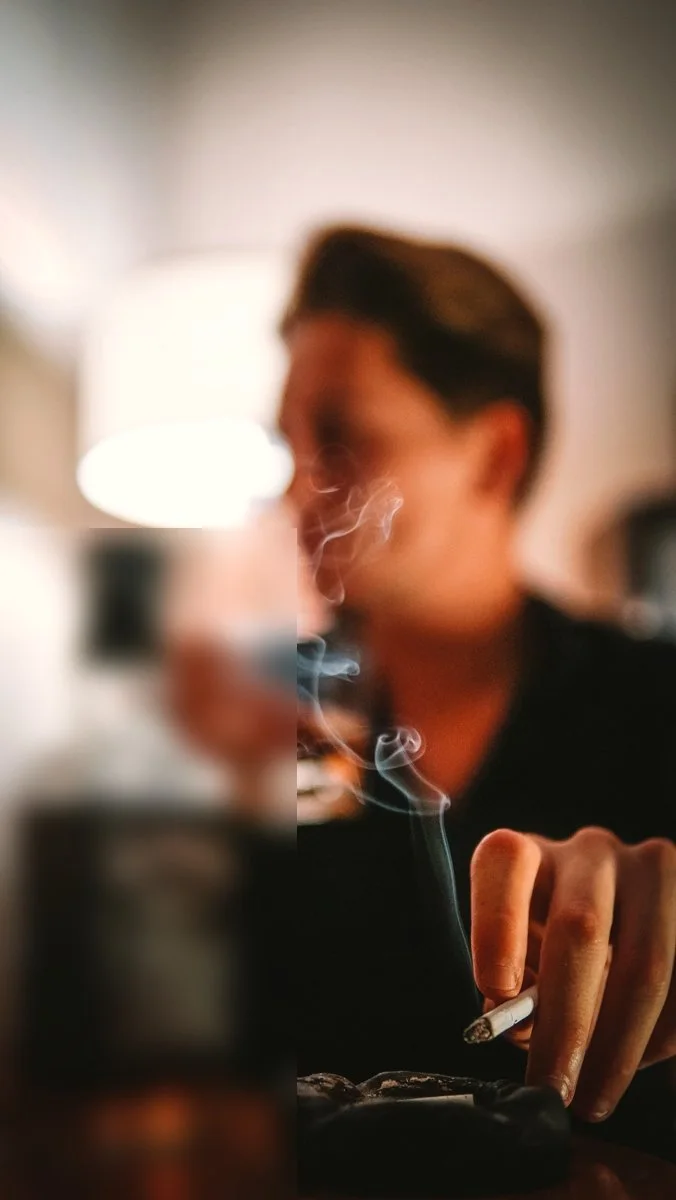
How a ritual becomes a need.
The mechanism is understandable and has nothing to do with character weakness. Who is under constant tension, whose body is looking for a way to come down. Alcohol does it reliably — it mutes, it relaxes, it flips the switch. The brain remembers: It works.
Over time, it takes a little more to feel the same effect. The one glass for celebration becomes the one glass for reassurance, then the self-evident glass, then the glass without which the evening does not end. Rarely a rupture, usually a quiet shift — over months, over years. The real issue is not alcohol. It is the tension against which he helps.
This is not a test and a diagnosis. But if you have nodded at several points, it is worth once to have accurate measurement of what really happens at night.
Typical Questions and Observations
These indications are not self-diagnosis. They help to arrange the personal concern for a specialist discussion.
- The thoughts circle already in the afternoon around the glass in the evening.
- Without the glass you will not come down properly in the evening.
- One has become imperceptibly more often two or three.
- You are more likely to drink alone and more likely to get rid of tension than to enjoy.
- You’ve already set out to take a break — and didn’t hold out.
- A quiet part of you evades the question of how much it has actually become.
Why people who wear a lot?
studies show that people who wear a lot get into this grey area more often than others – the pressure to perform is high, the demand on themselves is great, and a good wine is always available and socially completely accepted. Nobody looks wrong when the board opens a good bottle in the evening.
is exactly what makes it delicate: It is not noticeable for a long time – not to others and not to yourself. And the typical reaction is to make it up with yourself. The glass is just the symptom. Whoever releases the tension under it, on the other hand, needs the remedy less often – often completely by itself.
No guess. One finding.
With re:NOW there is no raised index finger and no exposure. Together and confidentially, we look at the role that habit plays in your life – and above all, what lies underneath it: stress, sleep, tension, the pressure to always function.
Because this is the crucial point: we do not treat the glass, but the reason. When tension subsides, when sleep resumes, when the body finds other ways to come down, the habit often loses its power on its own. This is not deprivation — this is regaining freedom.
Discreet, dignified, in a place where no one asks questions: the Kloster Beuerberg on Lake Starnberg.
Good to
know.
When is the evening glass too much?
There is no simple limit in milliliters. A more helpful sign is whether the glass has become a necessity: If the thoughts revolve around the evening wine in the afternoon, if it is no longer possible without it, if the pleasure has become a function – then a conscious, honest look is worthwhile. Not from fear, but from sovereignty.
Does that mean I am dependent? Get to know
No — and this is where there is a misunderstanding. Between pleasure and dependence, there is a wide grey area in which most people who carry a lot move. It’s not about a label, but about what role a habit plays in your life — and whether you still choose it freely or whether it chooses you.
What happens at re:NOW — am I pushed into something?
No. We do not decree renunciation and do not expose anyone. Together we look at why the body asks for something to come down in the evening — stress, sleep, tension — and start there. When the cause resolves, the habit often loses its power on its own. This is not withdrawal. This is a regaining of freedom.
Does anyone know I was there?
No. Discretion is the foundation. No guest lists, no external diagnosis, no more than fifteen guests at a time. Whoever is here is invisible.